Tuesday, December 11, 2012

Transgenetically Speaking


Image Source: NY Times. Melissa Bell.


In 2011, researchers from the renowned Mayo Clinic pushed science to its very limit in order to produce… a glow in the dark cat. While this might seem like a waste of time and resources (or an internet joke), the creation of this kind of cat is a marvel of modern transgenics.


Transgenics?
Transgenics is the study and development of organisms with artificially implanted genes from other creatures. The Mayo Clinic cat could glow in the dark because it possessed a gene for fluorescence that was taken from jellyfish. There has also been, for instance, a goat with a spider gene that produces milk with traces of spider silk. There are even transgenic plants, much like the synthetically nutritional golden rice.

Making the Genetic Magic Happen
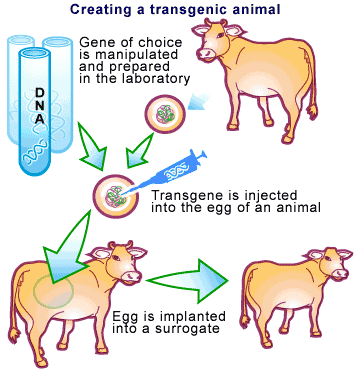
Image Source: Science Creative. Helmut Kae.
There are many different ways to create transgenic organisms, but one of the most common is to just inject the gene into an embryo. Scientists isolate the gene of interest, or transgene, from another organism and inject it into a fertilized embryo in a laboratory setting. This embryo (with the transgene) is then implanted into a surrogate organism of the same species until eventually the transgenic animal is born. The con to this method is that there is a very low chance the embryo will survive the pregnancy or even incorporate the transgene in the first place. This makes the transgenic approach a very costly and time-consuming process.


What’s the Point?
Golden rice on the left, white rice on the right.
Image Source: Gates Foundation.
Scientists don’t create transgenic organisms so they can take over the world or develop genetic monstrosities; in some cases the organisms are used to directly benefit others. Golden rice, for instance, is part of a project to prevent malnutrition in poorer countries. Many adults, much less children, in these nations can only afford one bowl of rice a day. One bowl of normal white rice confers very few nutrients and can lead to severe nutrient deficiencies or death if not supplemented with other foods. Golden rice, on the other hand, was developed to be a powerhouse of nutritional goodness and provide plenty of health benefits even in a single bowl. Its signature golden color actually comes from the beta-carotene (or vitamin A precursor) it produces.

The main purpose of the glowing cat study was to track an AIDS resistance gene. The Mayo Clinic scientists coupled the resistance and fluorescence genes together in the cat, meaning that both would be incorporated into the cat's genome. The fluorescence was a signal that the cat successfully incorporated the AIDS resistance gene, helping to further research for a cure to the disease. A worthy goal with a pretty unique cat on the side.

No comments:

Post a Comment